Esther Ballard b. 1632

Esther Ballard 10th great grandmother on RootsMagic tree

Esther/Hester sailed, on the James, with her parents and younger brother from a London port to Lynn, Massachusetts on July 13, 1635. Page 107 of this book: The original lists of persons of quality, emigrants, religious exiles, political rebels, serving men sold for a term of years, apprentices, children stolen, maidens pressed, and others, who went from Great Britain to the American plantations, 1600-1700 at HathiTrust.

Esther married Joseph Jenckes they had at least 7 children.  Their son Joseph Jenckes was Governor of Rhode Island from 1727-1732 his story at Wikipedia.

At about age 18 Esther was one of 4 people fined for wearing silver or silver lace. In Colonial New England, wearing silver was a crime for plain citizens, those making less than 200 pounds. The colony followed  Sumptuary law, description at Wikipedia. “If bourgeois subjects appeared to be as wealthy or wealthier than the ruling nobility, it could undermine the nobility’s presentation of themselves as powerful, legitimate rulers”.

Page 99 of this book: The history of Lynn, by Alonzo Lewis: At the Quarterly Court, on the twenty ninth of June [1652], the following presentments were made. We present Ester, the wife of Joseph Jynkes Junior for wearing silver lace.

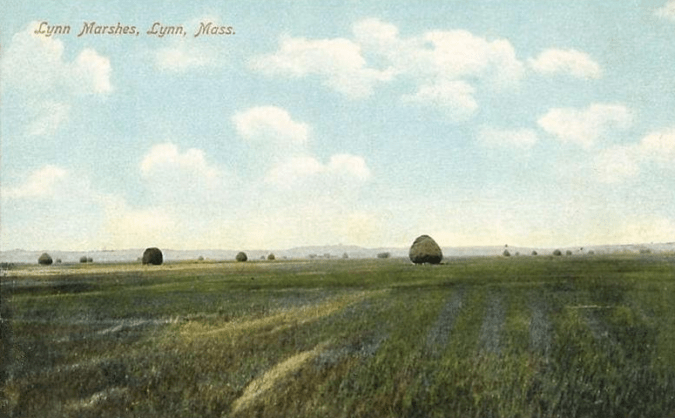
Lynn Marshes


Maria Henrica Rodenbeck b. 1837 and Hinrich Henrichs b. 1836

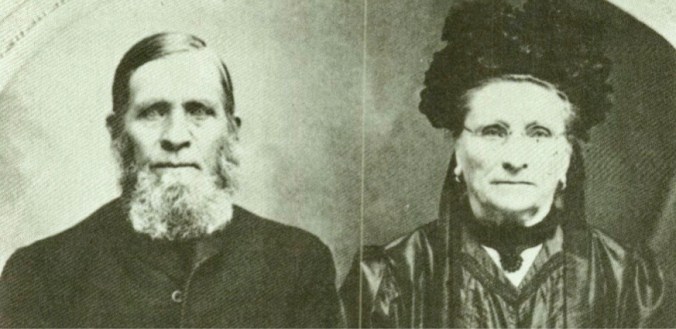
March 18, 1885 Maria, Hinrich, their seven children and probably Hinrich’s brother Martin sailed from Germany on the ship America and arrived in Baltimore, Maryland first making a quick stop in New York harbor. They carried two pieces of luggage, for the whole group. Here’s a photo of Hinrich and Maria, shared on FamilySearch.org. Maria is the maternal grandmother of Mary Frerichs Roose, they could pass for twins.

Henrichs, Henry and Maria Rodenback

Henry and Maria Rodenback Henrichs

Maria was born May 10, 1837 in Germany. She died Apr 9, 1926 in Allison Iowa and is buried at Butler Center Cemetery. Maria married Hinrich Henrichs (spellings vary) in Germany where he was born May 1, 1836, he died Aug 21, 1918. Maria and Hinrich Henrichs share a large headstone with HINRICHS and Ruhe in Gott, Rest in God engraved. Both have a smaller stone Mutter mother and Vater father with their names and birth death dates engraved.

Benedict Arnold b. 1614, the Govr’s son

screenshot.png

Photo at Rhode Island Historical Cemetery Commission

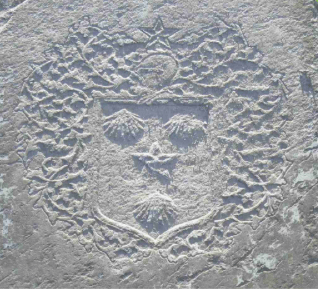
Benedict the 2nd born about 1641 has this headstone with the family crest, three shells, a center star and (not shown) a rose in each corner. This is gorgeous and indexed at the Rhode Island Historic Cemetery Commission : the stone was “carved by John Stevens II and lettered by his brother Philip”. Benedict, other Arnolds and Arnold in laws are at the Governor Arnold Burying Ground in Newport, Rhode Island, in a residential area, a tiny cemetery with less than 70 memorials. On Google maps it appears next to a private home with a bike parked on the side fence and a Starbuck’s within 100 feet or so.

There were five Benedict Arnolds in this family in the early days of America.

Benjamin 1- born 1615, son of William and Christiana Peake Arnold, married Damaris Westcott. He became President then Governor of Rhode Island. Father of

Benjamin 2- born about 1641 married Mary Turner, then Sarah Mumford. Parents of

Benjamin 3- born 1683 married Patience Coggleshall. Parents  of

Benedict 4- born 1719 married Hannah Waterman. Parents of

Benedict 5- born 1741 married Margret Shippen. This Benedict is the one of the American Revolution, labeled a traitor. He is buried in London, at St. Mary’s of Battersea, where William Blake was married, near the river Thames. Changes in Longitude has a full article and a comment section with many opinions about Benedict 5s actual crimes and intentions.

Benjamin 5s mom Hannah Waterman is buried at Old Norwichtown Cemetery in Norwich, Connecticut. This family suffered. From 1738-1755 four of six children died of yellow fever. For some reason, maybe the death of four children, the dad Benedict 4 drank, a lot. By 1756 the life planned for great-grandson of the Govr Benedict 5, private schools then Yale, was dashed, the money was gone, the family somewhat scorned by their community because of the dad’s drinking. Hannah the mom died in 1759, the dad drank more and died soon after. Benedict 5 got an apprenticeship with his mom’s side of the family, then the rest is history.

Hannah’s grave has an anonymous admirer who decorates the grave about once each year, 2011 story here: An anonymous admirer has once again shown devotion to the mother of one of history’s most infamous figures with a gift of flowers and light.

Angell, Israel letter 1775 to brother Hope

Brother I am much alarmed At the News of the Conduct of the people in Providence And the towns Adjacent, to hear that they are likely to Rise in mobs on the account of Salt’s rising and Some other Small Articles. I beg of Every honest and well meant Person. both in town and country, to Exert them Selves to The utmost of their power to Suppress any riotous proceedings Among your Selves, Especially at this time. For God Sake Let us unite all as one in America. If we don’t, but fall at variance among our Selves, of all God’s Creation we Shall be the most Miserable.

1775 Dec 1:The war is taking a toll. Israel asks his brother about the status of nails. Their brother Elisha could find no nails in Providence. Israel asks if Hope can find some in Newport. The nails are needed to finish up a room is Israel’s home before winter comes. The British brig Nancy has arrived with 2 Brass Six pounders, Canon Shot and “every war like article that can be mentioned”. Colonel Huntington’s wife Faith Trumball hanged herself months after witnessing the end of battle scene at Bunker Hill.

Israel begins the letter thanking GOD (he always capitalized the word god) for the blessing of health and wishing the same for Hope and his family.

Letter from Israel to Hope, December 1, 1775 from Prospect Hill

Rhode Island Historical Society. Proceedings of the Rhode Island Historical Society. Providence. Volumes and cataloging are a little wonky, this is the 1873-1874 copy, Section 7, then page 45. 

Colonel Huntington and his wife -About May 20, 1775

Wikipedia contributors. “Jedediah Huntington.” Wikipedia, The Free Encyclopedia, 8 Nov. 2016. Web. 26 Jul. 2017

Manford Byron Speedy b. 1838

Manford Speedy b.1838 on RootsMagic tree

Manford Byron Speedy was born March 18, 1838 in Island Creek, Jefferson County Ohio. His dad William Speedy and mom Elizabeth Glenn were both from Pennsylvania. MAnford lived on a farm with his parents and 5 brothers.  

In 1856, age 18, Manford left Ohio for Shell Rock, Iowa. In 1864 he married Ann Eliza Coats and they had three children. Typhoid fever takes Ann and the youngest daughter’s life around 1869. In 1870 Manford had a farm where he lived with his Coats in-laws, his father William and his and Ann’s children. In 1874 Manford married Elizabeth Stewart and they had 5 children.

The 1870 Agricultural Census shows Manford’s farm production: 160 total acres, 120 acres tilled, 14 acres of grassland, 3/4 acre of potatoes, 3 acres of apple trees. He had 8 milk cows, produced 700 lbs of butter, had 8 other cows with 4 calves dropped, 112 swine and 50 poultry. This poultry produced 250 dozen eggs for the year. 5 cord of wood were also produced.

Manford was known as MB and considered a noble pioneer in the Shell Rock and Allison areas of Butler County, Iowa. He was involved in local politics, he was a sheriff, farmer, general store owner and livestock buyer. Manford ran for Sheriff and was elected in 1877, newspaper articles document the race and who ‘should be made the victim of slander and abuse this fall.’  In September 1877 Manford was endorsed in the local newspaper, a ’tower of strength’. In October 1877 Manford ‘called’ not on the phone but in person at the newspaper offices ‘MB Speedy one of the straight men on the straight Republican ticket for Butler county called last Saturday and exchanged ideas with us on the political topics of the day. Glad to see him’.

So, Manford had a lot going on. Then in 1903 when he was 64 years old, a telephone was delivered to his home. “Our telephone exchange has enlarged somewhat recently, new ‘phones being put in the residence of M.B. Speedy, H.C. Parsons and E.J. Davis.” This was such a big deal it was posted in the local newspaper.

Sources

Daniel and Rebecca Rhodes Power Williams marry 1676

Daniel is the second son of Roger Williams, Roger is credited with founding Rhode Island when banished from Massachusetts because of radical religious beliefs. Rebecca Rhodes is the daughter of Joanna Arnold and Zachariah Rhodes, she first married Nicholas Power (he may have died at sea) she married second Daniel.

When they married around December 1, 1676 King Philips War was just ending. Dated entries in Volume 8 of The early records of the town of Providence, trace the end of the war, understood by most to be the deadliest war of the colonies.  From the preface, “The period succeeding the time embraced in the last named volume was one of disaster to the town, for the Indian War which had raged with varying success throughout the New England Colonies was then brought within the confines of Rhode Island. During a part of this period, previous to March, 28, 1676, and for some time thereafter the town was practically deserted, its business well nigh suspended and a portion of it destroyed by the ravages of the Indians. The townsmen however carried on such governmental affairs as were actually necessary, and during this time Roger Williams held the office of Town Clerk.”

Daniel and Rebecca’s wedding is recorded (Volume 8, page 15)

Dan: Williams & ye Widow Rebekah Power were married ye 2 of 10th ye first Mariage since God mercifully restored ye Towne of Prouidence.

So this could be the most real wedding story ever. “Our town was completely destroyed by war, people fled or were killed until only about 30 remained. We persevered, made a commitment and married.”

In this same Volume 8 Daniel’s brother Providence (page 14) is credited with rescuing his mom and maybe the town?

by Gods Providence it seasonably came to pass ye Providence Williams brought up his mother from Newport in his sloop and cleared ye towne by his vessel of all ye Indians to ye great peace and Content of all ye Inhabitants

Source:

Providence (R.I.). Record Commissioners. The Early Records of the Town of Providence, V. I-XXI … Providence: Snow & Farnham, city printers, 1892 (there are assorted editions of this ebook)

John Parrish b. 1640

John Parrish 11th great grandpa on RootsMagic tree

John was born in 1640 probably near Braintree, Massachusetts. He first married Hannah Jewell, she died before 1685 when John married Mary Waddell. John and Mary were active in Groton, John holding many elected positions: selectman, town council, surveyor, constable.

  • 1669: Original proprietor in Groton, granted 5 acres of land
  • 1676 Mar 13: The couple lived in Groton when it was destroyed by Indian wars
  • 1677: John was on the committee to rebuild after the town evacuated then returned months later. The record from October 12, 1677, Pages 52, 53, The Early Records of Groton, Massachusetts: 1662-1707 at HathiTrust, “This is the last record of any meeting held before the destruction of the town by the Indians, March 13, 1676. The inhabitants then were compelled to forsake their homes, and did not return until the spring of 1678. …that those present would go up in the spring following, and begin to repair our habitations again… which agreement he signed”.
  • 1685 John received 10 acres of land in Groton. After rebuilding the town, John and probably Mary, both played a big part in getting a pastor and church to Groton.
  • 1691 Dec 21, “At the same day thay did apoint and by uoat daclare that sd Josiah parkar and sar John parish & Wiliam longly & sam James parkar should go down & fach up som meet parson to preach to us & the town is to bare the charg”.
  • 1692 March 21, “Groton at a genaral town meting legally warned the town did then by uoat datannan that thay would giue to master hancock the full som of sixtey pound one fourth part siluer for a yers salarey for Preaching in order to ordnation in dew time and the other three parts in pay corn or prouishon at comon pays and mr hancocock bored himself:  John Parish was chosen to dascors with mr hancock to see if he wil acs apt of the towns profr”.

groton-first-parish-meeting-house

Sources
Groton (Mass. : Town). The Early Records of Groton, Massachusetts: 1662-1707. Groton: [Town of Groton], 1880.

Parish, Roswell. New England Parish Families: Descendants of John Parish of Groton, Mass, And Preston…  Rutland, Vt.: The Tuttle Publishing Company, inc, 1938.

And some $ Ancestry sources, Marriages, North American Families.

Charles Angell b. 1825

Charles Angell, my 3rd great uncle on RootsMagic tree

Charles Angell was born in Utica, New York to Dexter Angell and Clementine Benight. He grew up in Prairieton, Indiana and by 1845 he was in Illinois where he married Eleanor Black on April 2. They had eight children and were farmers in Illinois then in Butler County, Iowa near Clarksville.

The 1870 US agricultural census shows Charles owned a 120 acre farm, valued at $4800. He had 4 horses, 5 milk cows, 5 other cows, 41 sheep and 17 swine. The farm produced 240 bushels of wheat, 350 of Indian corn and 180 of oats. 146 pounds of wool, 30 pounds of potatoes, 150 pounds of butter, 40 bales of hay and 40 gallons of molasses were also recorded.

Sources

  • U.S. Federal Census Non-Population Schedules, 1870; Butler, Iowa; -at Ancestry
  • New York, Wills and Probate Records, 1659-1999 Wills, 1792-1922at Ancestry

Elizabeth Salome Myers b. 1842

Elizabeth Salome (Sally) Myers married Henry F Stewart, 1st cousin 4 times removed, in about 1867. In the midst of the Civil War, Sally was a teacher in Gettysburg, PA. Most in Gettysburg understood the war could come closer to their homes, the Confederate Army was close by at Antietam. On July 1 of 1863  school was out for the summer and the battles began in Gettysburg. Sally was 21 and instantly became a nurse to the wounded and dying soldiers.

Alexander Stewart of the 109th Pennsylvania Volunteers was Sally’s first patient. She asked the soldier what he needed, he answered nothing. He understood he was going to die. Maybe Sally helped Alexander write a last letter to his family, she did this for many soldiers. Alexander’s family met Sally when they came to Gettysburg to pick up their son’s corpse. The Stewart family thanked Sally for all she had done. Later that summer Sally had a letter form Alexander’s brother Henry. Henry Stewart was a minister, he and Sally kept in touch. Eventually Henry and his mom moved to Gettysburg. Henry and Sally continued their friendship and then married.

Parts of Sally’s story are here at Civil War Sources and here at GettysburgTimes.com. I’ve just ordered Sally’s Gettysburg diary The Ties of the Past, on Ebay, thank you SeattleGoodwillBooks.

Stewart, Salome M, and Sarah S. Rodgers. The Ties of the Past: The Gettysburg Diaries of Salome Myers Stewart, 1854-1922. Gettysburg, PA: Thomas Publications, 1996. Print.


Elizabeth Harter b. 1795

Elizabeth Harter 5th great grandmother on RootsMagic tree

Elizabeth was born in 1795 in Beaver, Pennsylvania near Pittsburgh. At age 9 or so Elizabeth and her family set out for Ohio, ‘Early in the spring of 1806 the family of George Harter started from Beaver in a six-horse wagon for their new home in Ohio. A daughter, then in her ninth year, later Mrs. Jehu Grubb, had in after years a very distinct recollection of the journey out; of seeing the men at work digging the race for Slusser’s mill, as they crossed Nimishillen: of her great disappointment at the size of Canton, expecting to see it as large as Pittsburg-, when it contained only three cabins, all told.” Page 43 Old Landmarks of Canton and Stark Ohio at HathiTrust.

Part of Elizabeth’s childhood in Canton was working the family farm. At 15 she’s sent to the town mill with bushels of wheat. On Elizabeth’s horse is the lighter sack, also she’s leading a second horse with the heavier 3 pound sack. It’s a long day riding to the mill, then waiting at the mill. Elizabeth starts home closer to dark than she had hoped. Following the trail through the woods is more difficult without sunlight. She rides on with her milled wheat (flour- but not like 2016 flour) and two horses. At one point she strays from the trail and a tree bough sweeps the bag of flour off the second horse.

“Here was a new difficulty, and she was about at her wits’ ends : but the girls of that time did not readily yield to trifles, and Elizabeth dismounted and used her best endeavors to put the sack back to its place; she did succeed in getting it upon her shoulder, but her strength was not great enough to throw it over the horse ; she worried herself with it, however, a long time, and was about giving up in despair, with the thought of going back to Canton until morning, as she had yet several miles home, when an old settler, Frederick Rodacker, happened to come along, and threw the sack upon the horse.”

The old Mr. Rodacker offers Elizabeth a place to stay till morning, she accepts. Back home her mom Elizabeth Bowman Bair is worried and “she blew a horn for more than half the night, so that her daughter might discern the way to the house”.

Elizabeth Harter was married to Abraham Bair and a mom at 18. After marrying Abraham she wasn’t so much a housewife. She didn’t stay in the house but was outside with her husband clearing land, rolling logs and burning brush. She may have had 10 children total with Abraham and her 2nd husband Jehu Grubb. Elizabeth’s War of 1812 pension application and her record keeping were majorly responsible for 2nd husband Jehu Grubb being recognized as a son in the Grubb Family dynasty, Curtis Grubb was Jehu’s father. Jehu’s story is worth reading, on Wikipedia.

bair-house-jacob-hFirst child Jacob built this house (at Wikipedia, photo by Sanfranman59). It is part of the National Register of Historic Places listings in Stark County, Ohio. The home was probably built in 1869 in Elizabeth’s 73rd year. Jacob inherited land from his stepfather Jehu Grubb’s estate and built this house on that land.

Sources